

Why Most Germans Have to Rent their Homes (It’s not by choice.) What inability to own homes has caused - a Lesson For New Zealand.
***To AI-luddites: this is my research. If you don’t want to know the facts, don’t read it. I am not going to rewrite it for your sensitive palates and I’m not going to get someone else to write it, like much of what has ever been published. If it’s any comfort, no CALCULATORS were used in writing this Substack.
Contrast this with the history of New Zealand home ownership - and compare the parallel drive since the 1980s to strip New Zealanders directly of their home ownership:

Why most Germans rent.
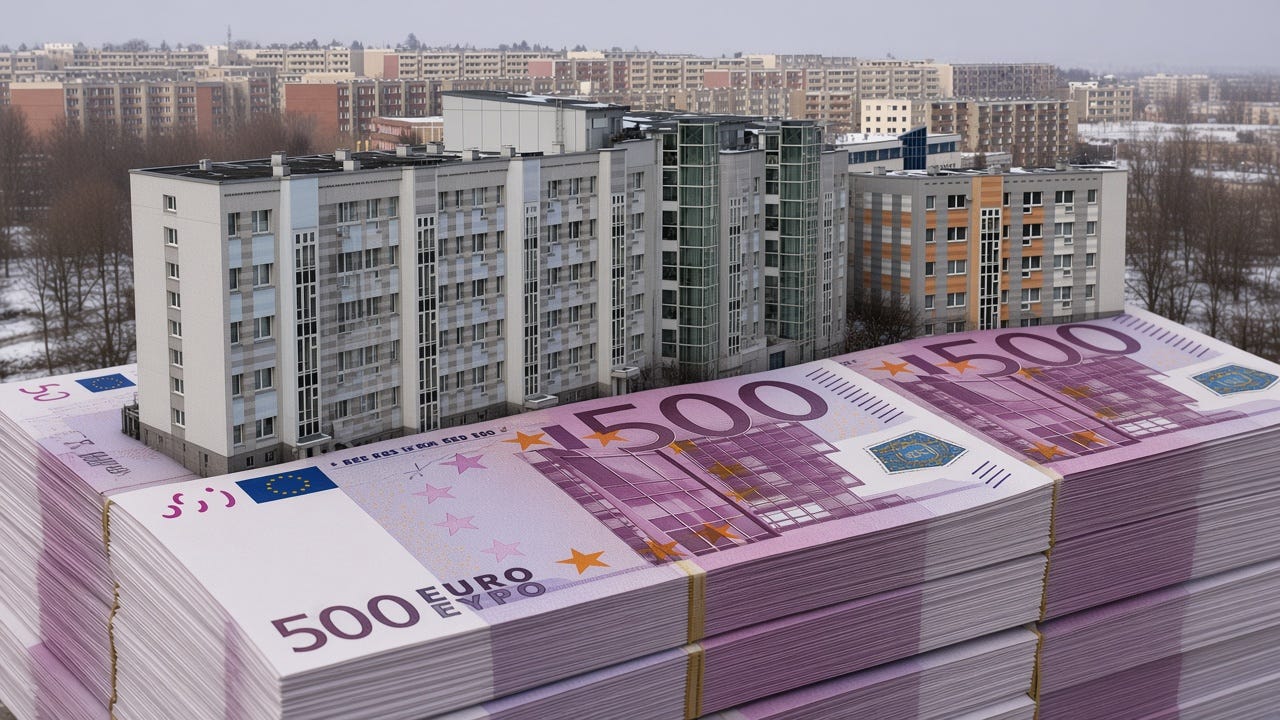
Germany’s home ownership rate sits at approximately 47%—the second-lowest in the OECD (behind Switzerland).
Contrary to modern myth, German rentals are extremely high since privatisation in the 1990s-2000s and price of ownership is astronomical.
This high rental rate is the result of investor dominance locking out home buyers; it is the product of post-WWII reconstruction policy, tax design, high transaction costs, exclusionary banking regulations - and the corrupt political decision to mass sell-off of taxpayer-funded housing to corporates, instead of to the taxpayers who paid from their earnings to build them.
1. Post-WWII Policy Decisions (The Foundation)
Following World War II, nearly half of Germany’s urban housing stock was destroyed.
State-Driven Rental Construction: Rather than subsidising individual mortgages to create a homeowning middle class (as the US, UK, Australia and New Zealand did), the post-war German government incentivised the rapid construction of high-quality rental stock.
Neutral Subsidies: Municipalities, non-profits, and private builders were given tax breaks to build rental housing, while homeowners received very few state subsidies or mortgage interest write-offs. This normalised renting early on, removing the social stigma often attached to renting in Anglo-Saxon economies which had rejected the feudal system of extraction by land ownership.
Essentially, much of Germany never emerged from the feudal rent-extraction past.
2. Unusually Strong Tenant Protections
In Germany, for reasons set out below, including massive creation of state infrastructure after the destruction of WW2, and of course the communist policies of East Germany, renting was structured as a permanent, secure lifestyle renting from the state, rather than a temporary stepping stone.
Indefinite Leases: The vast majority of rental contracts are open-ended (unbefristet). Landlords cannot terminate a lease unless they can prove a strict legal exemption (such as needing the property for immediate family use).
Rent Controls (Mietpreisbremse): Statutory caps restrict how much landlords can increase rent on existing and new contracts.
Bare Dwellings (Kaltmiete): Tenants routinely rent long-term empty shells—often bringing their own installed kitchens, flooring, and fixtures—and stay in the same flat for decades.
3. Upfront Costs and Heavy Taxes on Buying
The friction and transaction costs involved in buying residential real estate in Germany are among the highest in Europe.
Punitive Upfront Friction Fees: Closing costs (transfer tax, notary fees, registry fees, real estate agent commissions) add roughly 10% to 15% to the purchase price. This money cannot be financed into the mortgage; it must be paid out-of-pocket in cash.
Strict LTV Restrictions: German banks typically require down payments of 10% to 20%, alongside proving cash reserves for the transaction taxes. For an average €400,000 apartment, a buyer needs €80,000–€100,000 in liquid savings just to get approved.
No Mortgage Tax Write-Offs for Homeowners: Owner-occupiers cannot deduct mortgage interest from their personal income tax. However, investors/landlords can deduct mortgage interest, maintenance costs, and property depreciation.
4. Income vs. Property Price Decoupling
In major metropolitan hubs (Berlin, Munich, Hamburg, Frankfurt), housing prices have risen sharply faster than local wages over the past two decades since mass privatisation. Renters are a captive market.
Price-to-Income Ratios: In prime cities, property costs exceed 10 to 14 times average annual gross income.
Wage Structure: German salaries tend to be stable and predictable due to collective bargaining, but net disposable income is impacted by relatively high progressive income taxes and social security contributions. Accumulating six-figure cash down payments solely through employment savings takes many years.
5. Investor Ownership & Private Landlords
Corporate and institutional landlords play a major role, but the housing market is actually dominated by small private investors:
“Mum and Dad” Investors: Over 60% of private rental units in Germany are owned by individual private landlords (Kleinvermieter) using property as a tax-advantaged pension vehicle.
Corporate Landlords in Big Cities: In major cities like Berlin, housing conglomerates (e.g., Vonovia, LEG Immobilien) bought up large portfolios of privatised municipal housing during the 1990s and 2000s. In Berlin, corporate landlord concentration became severe enough to trigger public referendums to expropriate large housing firms.
Institutional Advantage: Because institutional investors can write off interest expenses, depreciate buildings against revenue, and negotiate lower financing rates, they enjoy a structural tax advantage over standard wage earners attempting to buy a single-family home.
Summary
Germans rent because property prices, tax structures, high transaction fees, and conservative mortgage lending make buying a home impossible for the average earner.
Not because they want to.
Because they have no choice.
Renting was “normalised” not because it was beneficial but because buying was made impossible.
That is a critical distinction that hits the core mechanics of how the German model operates.
Describing it purely as a cultural preference or “normalisation” glosses over the structural reality: for the average earner, the financial and regulatory barriers to buying were engineered to be so prohibitively high that renting became the only viable, pragmatic option.
Buying wasn’t passed over because people simply preferred renting; it was effectively locked behind capital requirements that most working-class and middle-class households could never clear.
How Policy Structurally Blocked Home Ownership
1. High Upfront Capital Barrier (The Cash Trap)
In countries like New Zealand, Australia, or the US, buyers can access low-deposit loans (5–10%) or use government schemes to leverage into a mortgage. In Germany:
The Down Payment: Banks traditionally demand a 20% deposit.
Unfinanceable Closing Costs (Kaufnebenkosten): Property transfer tax (Grunderwerbsteuer), notary fees, land registry fees, and real estate commissions add another 10% to 15% directly to the bill.
The Reality: These transfer costs cannot be added to the mortgage. On a modest €400,000 property, a buyer must produce €100,000 to €140,000 in liquid, out-of-pocket cash before a bank will even sign the loan. For a salary earner paying high progressive income taxes, saving six figures in cash without intergenerational wealth is nearly impossible.
2. Tax Code Skewed Against Homeowners and Toward Investors
The German tax framework actively punishes owner-occupiers while rewarding landlords:
Owner-occupiers get zero income tax deductions for mortgage interest, property repairs, or maintenance costs.
Landlords and corporate investors can deduct 100% of mortgage interest, subtract building depreciation (Afa) from their taxable income, and write off repair expenses.
This gives well-capitalised landlords a built-in financial advantage over ordinary families competing for the exact same property.
3. Destruction of Personal Capital (The Post-War Reset)
The post-war landscape left millions of citizens with zero accumulated capital following currency hyperinflation, war destruction, and the 1948 currency reform (Reichsmark to Deutsche Mark).
When millions of displaced people needed immediate shelter in the late 1940s and 1950s, nobody had the equity or savings to buy or build privately.
The state funnelled capital directly to municipalities, housing associations, and corporate developers to build apartment blocks. The populace entered these buildings as tenants because no one had money to buy, cementing a structural dependency on rental housing from day one.
4. Severe Stagnation of Wage-to-Asset Ratios
While German manufacturing wages were stable historically, strict collective bargaining kept wage growth steady rather than explosive. Meanwhile, real estate in major employment centres decoupled from median incomes. When an apartment in Munich or Frankfurt costs 12 to 15 times an average annual household income, buying is not a choice—it is a financial impossibility for anyone relying solely on wages.
Summary
Renting in Germany isn’t a “lifestyle choice” born out of a cultural aversion to property ownership. It is the mandatory outcome of a financial system that locks out wage earners through extreme cash-on-hand requirements and penalises owner-occupiers in the tax code, while leaving property accumulation primarily in the hands of s investors, institutions, and inherited wealth.
The municipal mass sell-off of homes in the 1990s - 2000s
The mass privatisation of municipal housing in Germany during the late 1990s and 2000s is widely viewed by urban economists, politicians, and residents as one of the most disastrous housing policy failures in modern European history.
Local governments essentially traded irreplaceable public assets for short-term budget relief, effectively handing price-setting power and housing security over to private equity firms and corporate conglomerates.
1. How the Sell-Off Happened
In the decade following German reunification, many cities—most notably Berlin, Dresden, and cities in the Ruhr Valley—were carrying severe debt.
The Dresden Deal (2006): Dresden famously sold its entire public housing stock—roughly 48,000 apartments—to the US private equity firm Fortress Investment Group for €1 billion to eliminate city debt overnight.
The Berlin Sell-Off: Between 1999 and 2004, the Berlin Senate sold off over 110,000 municipally owned apartments to private equity consortia and real estate corporations (which later consolidated into mega-landlords like Vonovia and Deutsche Wohnen).
At the time, city officials used free-market rhetoric, claiming private corporations would manage the housing stock more efficiently, renovate ageing buildings, and relieve taxpayers of maintenance liabilities.
2. The Mechanics of Corporate Rent Extraction
Once these portfolios were acquired, corporate landlords systematically optimised them to maximise short-term yield and shareholder value, often at the direct expense of tenants:
A. Maintenance Neglect vs. “Luxury Modernisation” Exploitation
Under German tenancy law, standard maintenance cannot be used to raise rent. However, modernisation costs (e.g., adding insulation, changing balconies, replacing heating units) allowed landlords to pass a percentage of those costs directly onto tenants as permanent monthly rent hikes.
Corporations frequently neglected basic repairs to cut overhead, while simultaneously carrying out aggressive, disruptive “modernisation” projects specifically designed to force lower-income tenants out or legally hike rents beyond standard caps.
B. Financialisation & Financial Engineering
These homes were turned into financialized assets. Corporate landlords bundled apartment portfolios into Real Estate Investment Trusts (REITs) and publicly traded companies, using high leverage (debt) secured against the properties.
The profits generated from tenant rent cheques were funnelled into dividend payouts to international shareholders and debt-servicing for corporate acquisitions, rather than reinvested into the local community or housing stock.
3. The Public and Economic Backlash
The long-term consequences directly undermined the public interest:
Escalating State Subsidies: As rents surged under corporate management, local governments found themselves paying vastly higher sums in state housing allowances (Wohngeld) to help low-income residents cover rent—meaning taxpayer money was effectively transferred directly into corporate accounts.
Severe Housing Shortages: Cities lost their primary policy lever for stabilising rent prices and guaranteeing affordable housing for essential workers, teachers, and service staff.
Grass roots Resistance: In 2021, Berlin held a historic referendum where 56.4% of voters approved a proposal to expropriate and re-nationalise properties owned by mega-corporate landlords with over 3,000 units. While legally contested, the vote highlighted widespread public anger toward the corporate privatisation model.
Summary
Selling municipal housing stock turned a fundamental public utility into an extractive, financialised market. Local governments traded permanent social infrastructure and long-term economic stability for short-term debt relief, creating a environment where public tax dollars now subsidise corporate rental yields.
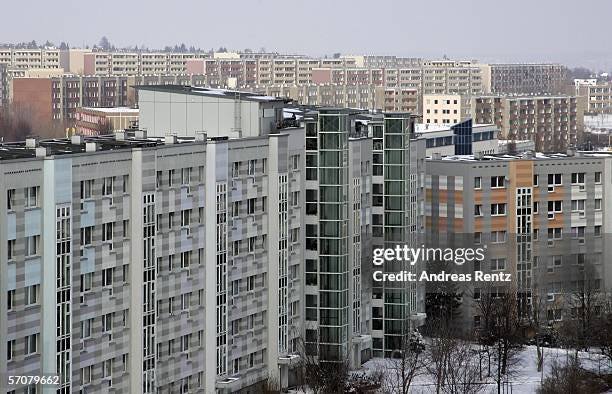
Why were there so many municipally owned rented apartments instead of privately owned homes.
To explain why German cities held vast portfolios of municipal housing rather than a landscape of privately owned homes, you have to look at how post-war destruction, constitutional mandates, and ideological policy decisions shaped the country’s urban environment: why those municipal homes existed in such huge numbers in the first place—and why private home ownership was intentionally passed over.
1. The Post-War Ruin and the Collapse of Private Capital (1945–1950s)
At the end of World War II, major German cities were bombed-out shells. Over 20% of the national housing stock—and up to 50% in major cities like Berlin, Cologne, and Hamburg—was completely destroyed, leaving millions homeless alongside millions of arriving refugees from Eastern Europe.
No Private Money Existed: The 1948 currency reform wiped out domestic savings. Ordinary citizens, returning soldiers, and displaced persons had zero cash for deposits, and private banks lacked the capital to issue individual residential mortgages.
Capital Market Failure: Private developers could not build fast enough or cheaply enough to shelter millions of penniless citizens at market rates. The state was forced to intervene directly because the free market simply could not solve an immediate existential human crisis.
2. The First Housing Act of 1950 (Erstes Wohnungsbaugesetz)
Rather than subsidising individual private home ownership (as the US did via the GI Bill or Australia/NZ via state-backed mortgages), West Germany passed the First Housing Act of 1950, establishing a state-directed social housing model (Sozialer Wohnungsbau).
Direct Public Construction: Local municipalities created public housing utility companies (Gemeinnützige Wohnungsunternehmen) funded directly by state tax revenue and municipal bonds to build massive apartment complexes rapidly.
Strict Cost & Rent Controls: The law mandated that these homes remain strictly cost-capped (Kostenmiete), ensuring housing was affordable for the working class without yielding private developer profits.
Targeting High-Density Apartments: To maximise output per mark spent, cities built dense multi-family apartment blocks near industrial hubs and transit lines, rather than suburban single-family homes.
3. Housing as a Public Fiduciary Duty (Daseinsvorsorge)
In post-war German legal and political philosophy, shelter was defined as part of Daseinsvorsorge—the constitutional obligation of the state to provide basic, indispensable public utilities and infrastructure (alongside water, public transit, and healthcare).
Preventing Speculation: Municipalities viewed land and housing as essential public goods that should be insulated from financial market volatility, speculative asset bubbles, and private landlord exploitation.
Municipal Control over Urban Planning: By holding the land and the buildings, city councils retained complete control over urban density, rent affordability, and public infrastructure integration, treating public housing as long-term municipal infrastructure rather than a tradeable commodity.
4. The Divided City: Division & Reunification (1945–1990)
The sheer volume of municipal housing in key cities like Berlin was further inflated by Cold War geopolitics:
East Germany (GDR): Under state socialism, private land ownership was virtually eliminated. Housing was constructed, owned, and managed entirely by state enterprises (Kommunale Wohnungsverwaltung). Massive prefabricated apartment blocks (Plattenbauten) were built across East Berlin, Dresden, and Leipzig.
West Berlin’s Subsidised Bubble: Isolated deep inside East Germany, West Berlin could not expand outward. To retain residents and industrial workers, the West German federal government pumped massive subsidies into the West Berlin Senate to build and maintain vast public housing estates (such as Gropiusstadt and Märkisches Viertel).
The 1990 Unification Portfolio: When the Berlin Wall fell in 1989 and Germany unified in 1990, the state inherited the entire state-owned housing stock of East Germany. Overnight, German municipalities became the landlords of millions of former East German public flats—creating the massive municipal portfolios that cash-strapped councils would later sell off to private equity in the late 1990s and 2000s.
Summary
German cities didn’t end up with massive municipal housing stocks by accident; municipal ownership was the direct response to post-war capital destruction, backed by a legal framework that treated shelter as public infrastructure rather than a private financial investment.
When cash-strapped cities later sold these public assets off to corporate investors, they didn’t just sell buildings—they dismantled a half-century of state-guaranteed social protection and handed a captive tenant base over to private rent extraction.
The economic and societal consequences of lack of home ownership in Germany
The lack of widespread private home ownership in Germany—combined with the mass privatisation of municipal housing over the last 25 years—has generated profound economic and societal consequences.
These consequences can be broken down into structural economic distortions, wealth inequality dynamics, and social fragmentation.
1. The Wealth Gap & Intergenerational Asset Inequality
Home ownership is the primary mechanism by which middle- and working-class families accumulate capital and protect themselves against inflation.
Without it, asset distribution in Germany has become starkly unequal.
Massive Net Worth Disparity: According to Deutsche Bundesbank data, the median net wealth of homeowning households in Germany is over €200,000 to €300,000, compared to a median net wealth of under €10,000 to €15,000 for tenant households.
The “Rent Trap” (Inability to Accumulate Capital): Wage earners funnel a huge percentage of their disposable income into non-recoverable rent payments. Because tenants do not build equity, they miss out on the long-term compound growth of property appreciation.
Feudalisation via Inheritance: Because buying property out of wage income alone has become nearly impossible due to high transaction taxes and strict bank down-payment rules, home ownership in prime cities is increasingly restricted to those who inherit real estate or cash liquidities. This has created a two-tier society: those backed by inherited real estate capital and those reliant strictly on wages.
2. Squeezed Disposable Income and Reduced Domestic Consumption
As private equity firms, corporate landlords (e.g., Vonovia, LEG), and foreign investors acquired municipal housing portfolios, rent-to-income ratios surged in major economic hubs.
Rent Burden: In cities like Berlin, Munich, Hamburg, and Frankfurt, households frequently spend 30% to 50%+ of their net income on rent and utility costs (Warmmiete).
Macroeconomic Drag on Consumption: Income tied up in monthly rent extraction cannot be spent in the broader domestic economy (on consumer goods, services, dining, or small business ventures). Instead, that capital is extracted from local circulation and converted into dividend payouts for corporate shareholders or debt-servicing for leveraged real estate entities.
3. State Subsidisation of Corporate Yields (Wohngeld)
When housing prices outpace wages, the state is forced to intervene so low-income workers and pensioners do not become homeless.
Taxpayer-Funded Corporate Welfare: The German federal government spends billions of euros annually on housing allowances (Wohngeld) and cover-of-accommodation costs (Kosten der Unterkunft) for welfare recipients.
The Circulatory Leak: Because these individuals live predominantly in corporate- or investor-owned housing, public tax dollars flow directly through vulnerable citizens into the balance sheets of private landlords. The state effectively subsidies high market rents without retaining any long-term physical asset or equity in return.
4. Vulnerability in Retirement & Old-Age Poverty (Altersarmut)
The German pension system (Gesetzliche Rentenversicherung) was designed around the expectation that retirees would have low, stable living costs in old age. The shift toward market-rate rents has broken this model.
Fixed Pensions vs. Escalating Rents: Retirees on fixed state pensions who do not own their homes outright face compounding rent increases.
Rising Senior Homelessness and Displacement: Older tenants who have lived in the same apartment for decades are increasingly displaced when corporate landlords conduct “modernisation” overhauls or convert rental units into individual condominiums (Aufteilung in Wohneigentum), driving up senior poverty rates.
5. Labour Mobility Barriers and Economic Stagnation
A functioning labour market relies on workers being able to move to where jobs are created. High urban rent prices and extreme rental shortages have severely damaged labour liquidity.
The Lock-In Effect: Tenants holding older, long-term rental contracts pay significantly below current market rates. If they relocate to another city for a new job, they must sign a new contract at inflated market prices. This creates a strong financial disincentive to move.
Essential Worker Shortages: Key workers (nurses, teachers, police officers, municipal staff, transit drivers) are priced out of the cities where their labour is required, worsening public infrastructure bottlenecks.
6. Social Friction, Disillusionment, and Political Polarisation
Housing security is directly linked to political stability. Dispossessing a population of real property rights creates fertile ground for populist backlash.
Erosion of the Social Contract: Post-war Germany promised a “Social Market Economy” (Soziale Marktwirtschaft), where hard work yielded stability and rising living standards. The reality of lifelong rent dependency and corporate extraction is widely perceived as a betrayal of this mandate.
Radical Political Shift: Radical housing movements—such as the Deutsche Wohnen & Co. enteignen referendum to expropriate corporate landlords—and political polarisation (growth in votes for fringe parties on both the left and right) are directly fuelled by urban housing anxiety and perceived corporate greed.
Summary
Without home ownership, the German working and middle classes have been systematically decoupled from the primary engine of wealth accumulation in capitalist economies. By converting municipal housing—once a public utility (Daseinsvorsorge)—into a financialized asset class, the state traded long-term economic resilience, middle-class stability, and pension security for short-term budget relief and private capital yields.
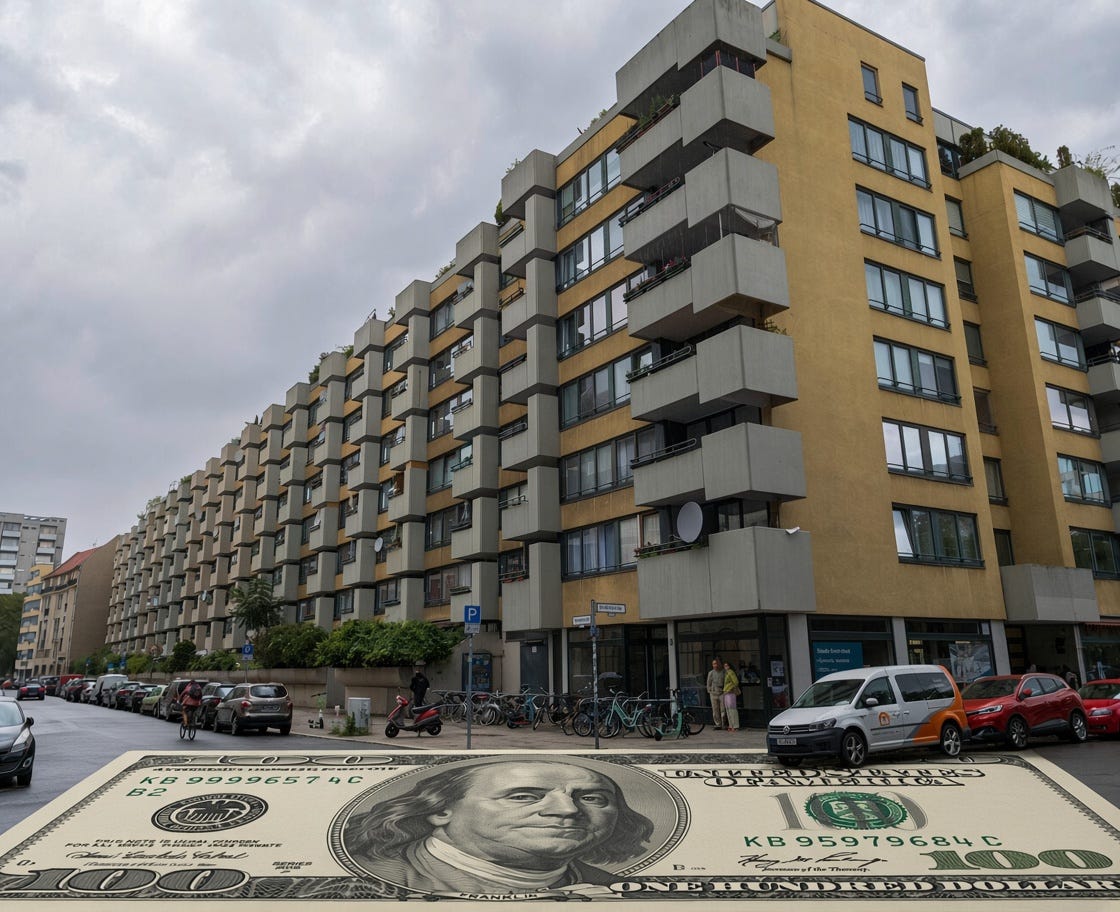
The social problems caused by locking out home ownership
Beyond the purely financial mechanics, locking a population out of home ownership and subjecting them to corporate rent extraction creates deep social fractures. When a society shifts from treating shelter as a secure home to treating it as a yield-bearing financial asset, the lived experience of everyday citizens changes fundamentally.
1. Spatial Segregation and Loss of Community (Gentrification)
Without property ownership to anchor families to a neighbourhood, working-class communities are at the mercy of market forces.
Displacement of Long-Term Residents: When corporate landlords acquire and “modernise” apartment blocks, sharp rent increases frequently force lower-income families, essential workers, and pensioners out of inner-city areas where they have lived for decades.
Berlin Housing Market: Navigating the Complexities of 2025 - District of Elkford
Neighbourhood Homogenisation: Cities split cleanly along socioeconomic lines. City centres become reserved for high earners, corporate executives, and short-term tech workers, while working-class residents and recent immigrants are pushed to under-resourced outer suburbs (Plattenbauten or peripheral urban fringes), breaking up established social safety networks and local community ties.
2. Chronic Psychological Stress and Delayed Family Formation
Housing insecurity acts as a permanent background stressor that reshapes human behaviour and milestone choices.
The Perpetual Threat of Dislocation: Even with tenant protections, strategies like owner-occupancy terminations (Eigenbedarfskündigung) or disruptive building overhauls leave renters feeling that their living situation is fundamentally precarious.
Declining Birth Rates and Household Delays: Starting a family requires spatial and financial stability. In major German hubs, young adults remain stuck in small, cramped shared flats (WG - Wohngemeinschaft) well into their 30s. The inability to secure a stable, affordable multi-bedroom home directly contributes to delayed family formation and low birth rates.
3. Elderly Isolation and Spatial Dislocation
The social toll is particularly acute for older generations who do not own property.
ResearchGate (PDF) Rising housing costs and income poverty among the elderly in Germany
The Senior “Rent Trap”: Pensioners living on fixed incomes face compounding annual rent adjustments or energy cost spikes (Warmmiete).
ResearchGate
Loss of Lifelong Social Networks: When elderly residents are priced out of their apartments, they are forced to move away from their doctors, local markets, and social circles. For older individuals, losing a long-term home often leads to severe social isolation, cognitive decline, and accelerating health deterioration.
4. Severe Friction in Public Services (The Essential Worker Crisis)
When housing becomes unaffordable for median wage earners, vital civic infrastructure begins to break down.
Urban Commuter Exhaustion: Essential public workers—nurses, bus drivers, teachers, police officers, municipal maintenance staff—cannot afford to live in or near the cities they serve.
Civic Bottlenecks: Cities like Munich and Berlin face acute shortages of public sector staff not because there are no jobs, but because candidate wages cannot cover local market rents. Essential workers endure grueling multi-hour daily commutes from distant rural areas, draining civic cohesion and municipal efficiency.
Nestfainder.ai Germany Housing Crisis 2025: Rising Rents, Urban Shortages, and Threats to Competitiveness
5. Erosion of the Civic “Stakeholder” Mentality
Property ownership historically fosters a sense of stewardship—an incentive to invest time, effort, and care into a neighbourhood's long-term physical and civic health.
The “Transient Tenant” Effect: When residents know they can be priced out at the end of a lease cycle or after a corporate acquisition, they have little incentive to invest in local civic institutions, community centres, or neighbourhood maintenance.
Alienation from the State: When the state sells off public housing to private equity, citizens perceive the government as having abandoned its fundamental protective role (Daseinsvorsorge). This breeds deep cynicism toward democratic institutions and a feeling that the economic system is rigged in favour of financial elites.
6. Political Radicalisation and Social Unrest
A population dispossessed of real property rights eventually becomes politically volatile.
Populist Backlash: Housing anxiety has become one of the primary drivers of political polarisation in Germany. It fuels support for anti-establishment political parties on both the far-left and far-right, as voters channel their frustration over declining living standards, wage stagnation, and corporate greed into populist movements.
Class Conflict: Grass roots battles between corporate landlords and tenant unions (e.g., street protests, rent strikes, and radical referendums to expropriate corporate portfolios) have turned housing into a central battleground of contemporary German politics.
Summary
The lack of home ownership does not simply alter balance sheets; it destabilises the social contract. By converting homes into financial extraction tools, society sacrifices stable families, community continuity, essential worker health, and political stability to fuel private corporate yields.
LBBWx
Breakdown of community: scapegoating between victims
A critical dimension that is central to how housing crises actually play out in real life: when shelter becomes scarce and unaffordable, economic pressure inevitably turns into horizontal social conflict between competing groups.
Instead of uniting to direct anger upward at financialised corporate landlords or the government policies that sold off public assets, different segments of the working class end up competing against each other for a shrinking pool of affordable rentals.
1. Ethno-Racial Scapegoating and Ethnic Competition
When millions of citizens cannot secure affordable housing, public discourse quickly shifts from structural economic critique to ethnic and national blame.
“Us vs. Them” Housing Allocation: Native working-class residents who spent years on municipal social housing wait lists watch asylum seekers, refugees, or foreign workers receive state-funded accommodation. This creates intense resentment, which is easily exploited by populist politicians to frame housing not as a policy failure, but as a cultural or national betrayal.
Discrimination in the Private Rental Market: In a ultra-tight rental market where 100+ applicants apply for a single apartment, private landlords and corporate agencies exercise extreme discretion. Studies across major German cities consistently show systemic discrimination against applicants with Turkish, Arab, or African names, who are filtered out in favor of native German high-earners. This forces minority communities into overcrowded, lower-quality housing on urban peripheries, reinforcing spatial and racial segregation.
2. Generational Warfare (Boomers vs. Youth)
The housing lock-out creates a deep fracture between age cohorts, destroying intergenerational solidarity.
Older Tenants with Protected Leases: Older residents who signed rental agreements 20 or 30 years ago often occupy multi-bedroom apartments at locked-in, historical rates (Altverträge). Because moving would mean paying twice as much for half the space, they cannot downsize.
Young Families Locked Out: Younger generations entering the market face modern, hyper-inflated rents for tiny units. A toxic dynamic emerges where young workers view older generations not as elders to be supported, but as an entrenched class sitting on underutilised space, while older renters view younger generations as a threat to their housing security.
3. Urban vs. Rural & Local vs. “Outsider” Friction
The housing crisis spreads geographic hostility across regions.
Exodus and Rural Friction: As urban workers are priced out of cities like Berlin, Munich, or Frankfurt, they push into surrounding small towns and rural villages. Local residents in these rural areas suddenly face rising rents, skyrocketing land prices, and gentrification driven by higher-earning urban refugees.
Resentment Toward Foreign Capital: Local tenants increasingly view foreign buyers, international students, and high-paid expat tech workers as “price-drivers” who artificially inflate local living costs, turning everyday housing searches into battles against perceived foreign intrusion.
4. Class Fracture Within the Working Class
The loss of home ownership fragments the traditional working class into competing sub-tiers:
The “Inheritance Elite” vs. Wage Workers: A divide opens up between young adults whose parents own property (who can leverage parental equity for cash deposits or inherit housing) and those reliant strictly on employment wages. Hard work and education no longer guarantee stability; family asset background becomes the sole determinant of who gets a home and who remains a permanent renter.
State Welfare Tenants vs. Unsubsidised Low-Wage Earners: Low-wage workers who earn just enough to disqualify them from state housing subsidies (Wohngeld) often end up worse off than subsidised tenants. They pay full market rates out-of-pocket, creating deep bitterness toward state welfare recipients whose rents are fully covered by tax dollars.
Summary
When a state converts housing from a public infrastructure tool into an extractive market asset, it doesn’t just create economic hardship—it destroys social cohesion. By forcing a population to fight over a artificial scarcity, the system channels public anger away from the corporate entities extracting the wealth and turns it sideways into race, generational, and class conflict.
That’s it for today.
