

A significant part of New Zealand’s prosperous social welfare democracy was based on one of the highest home ownership rates in the world. Achieved through Government funding of home ownership.
(And how was this funded, and our our country built? Initially, on wealth tax and import taxes. Income tax was introduced later, to fund WARS.
Income tax was always introduced as a temporary measure to overcome crises.)
THIS is what is called "socialism" and "communism" by American propaganda, WORDS used to destroy all of the social democracies of South America, Iran, Sudan, and many other countries which refused to sell themselves like NZ has - including removing popular Australian PM Gough Whitlam, and New Zealand’s most popular PM in a century, Jacinda Ardern.
History concealed
An internet search question “Who introduced subsidised loans for first home buyers in New Zealand?“ will throw up the current New Zealand scheme to lend people $5,000-10,000 towards a deposit. That is not what built New Zealand. While appearing to be lip service, it is the opposite. About to be abolished by the current government, it was only ever a scheme to feed people into debt slavery to banks, using up their wages on high interest rates, to never truly own their homes.
It was introduced by the Fifth Labour Government in 2003 under Prime Minister Helen Clark.
It was originally called the Welcome Home Loan scheme and was introduced through Housing New Zealand Corporation. The scheme allowed eligible first-home buyers to purchase homes with very low deposits, with the government underwriting the mortgage risk for lenders.
Fiddled ever since in ever decreasing circles, in 2019, the scheme was renamed First Home Loan and later came under Kāinga Ora (the metamorphosis of Housing New Zealand’s building quality housing for all New Zealanders, into rental housing for people in need).

Who FIRST introduced government subsidised mortgages for first home buyers in New Zealand. What was the history of it.
The first large-scale government-supported mortgage system for ordinary home buyers in New Zealand was very different. Its roots go back to the late 19th century Liberal Government.
The key origin was the Advances to Settlers Act 1894, introduced by the Liberal Government led by Richard Seddon and Finance Minister Joseph Ward.
Seddon, who grew up in the poverty of Victorian England, survived smallpox, and lost his job after years of training, was clearly determined that New Zealand would never have the extreme poverty and wealth inequality of the old world. Land ownership reform and state support for the indigent was something he was able to accomplish, unlike the ill fated Guatemalan government half a century later, Iran, the rest of South America’s democratically elected governments, Carribean and Pacific islands, and Australia’s Gough Whitlam 70 years later.
Like President Franklin Roosevelt (who introduced the New Deal in America 2 generations later, when 25% of the population was starving, diseased and homeless due to the Robber Barons and the Great Depression) Seddon was the longest serving Premier of New Zealand, and died in office. Although unlike New Zealand, America immediately limited terms for re-election of popular, good presidents. If New Zealand were lucky enough to have a visionary leader escape through the mega-corporate/billionaire-sponsored party system we have now, we can re-elect them for as long as we want them.
Initially, Seddon’s scheme focused mainly on cheap state-backed loans to farmers and settlers, because private banks charged very high interest rates and credit was scarce. But the principle was established: the state would directly lend money at subsidised rates instead of leaving housing and land finance entirely to private banks.
The housing side expanded soon after.
Key stages:
Workers’ Dwelling Act 1905
Introduced by the Liberal Government.
The government built workers’ houses and provided favourable purchase terms.
This was one of the earliest systematic attempts in the world to support working-class home ownership through the state.
State Advances Act 1909
Created the State Advances Office.
Extended low-interest government lending directly to workers and home buyers, not just rural settlers.
This is arguably the clearest early ancestor of modern first-home buyer mortgage assistance in New Zealand.
Post-WWI expansion
Governments expanded cheap housing finance for returned servicemen and workers.
State-backed mortgages became a major instrument of social policy.
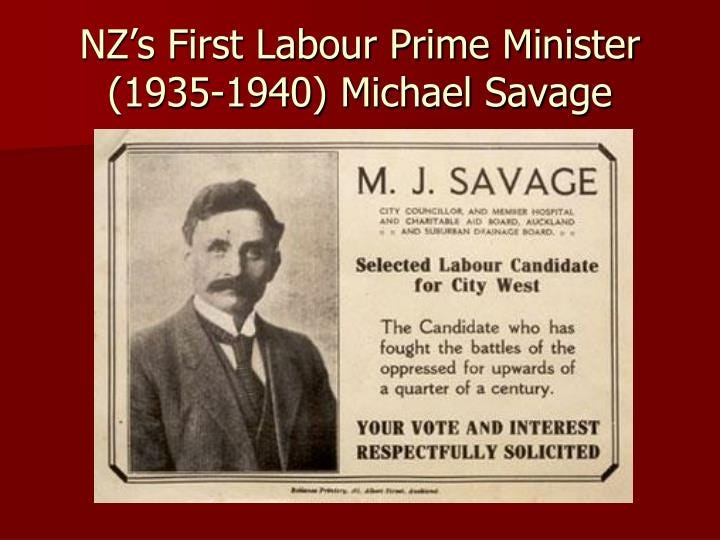
First Labour Government (1935 onward)
Under Michael Joseph Savage and Finance Minister Walter Nash, state housing and subsidised home finance expanded dramatically.
The government used state credit and the Reserve Bank to finance large-scale state housing construction and affordable mortgages.
This period entrenched the idea that broad home ownership was a national policy objective.
Postwar decades
Successive Labour and National governments maintained various subsidised housing loan systems through:
State Advances Corporation,
Housing Corporation,
family benefit capitalisation schemes,
low-deposit loans,
and state-guaranteed mortgages.
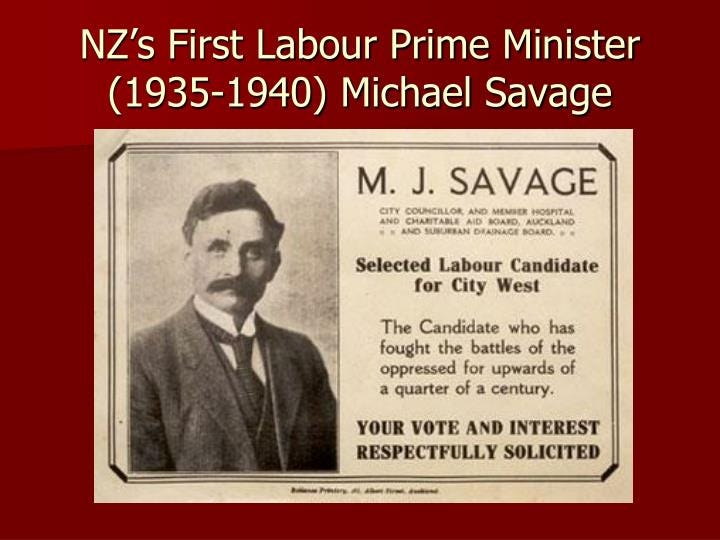
For much of the mid-20th century, New Zealand had one of the highest home ownership rates in the world because of these policies.
1980s–1990s neoliberal reforms

Many direct state lending functions were reduced, commercialised, or abolished during the reforms under Labour and then National governments.
The state shifted away from directly financing home ownership.
Welcome Home Loan (2003)
The Fifth Labour Government reintroduced a modern form of state-backed first-home lending.
Instead of the government directly issuing mortgages, the state guaranteed low-deposit (aka low equity, high payment) loans through private lenders.

Who was responsible for the State Advances Act 1909 and what were the details
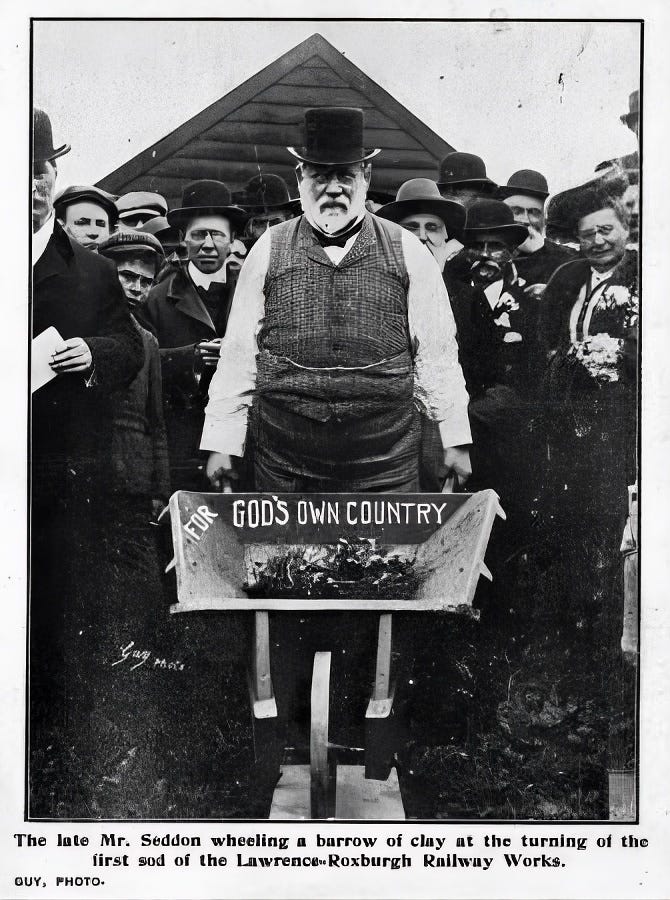
The State Advances Act 1909 was enacted by the Liberal Government under Prime Minister Sir Joseph Ward. The central political figures behind it were:
Joseph Ward — Prime Minister and former Treasurer/Finance Minister.
Richard Seddon — whose earlier lending policies laid the groundwork through the Advances to Settlers system.
Liberal administrations generally from the 1890s onward.
The Act consolidated and expanded earlier state lending schemes introduced by Seddon into a more unified state credit institution.
What it did:
Created the State Advances Office.
Allowed the government to lend directly to:
workers,
farmers,
local authorities,
and home builders.
Offered loans at lower interest rates than many private lenders.
Reduced reliance on private banks and mortgage companies.
Used the government’s stronger borrowing capacity to obtain cheaper overseas capital and pass lower rates on to citizens.
This was highly significant internationally. New Zealand became one of the earliest countries where the state systematically intervened to expand mass home ownership and productive lending through public credit.
For workers and home buyers specifically:
loans could be used to buy land,
build houses,
or pay off existing mortgages,
often on longer terms and lower rates than commercial finance.
The broader Liberal philosophy was:
land monopoly and financial concentration harmed democracy,
ordinary working people should have access to capital,
widespread property ownership would stabilise society and reduce dependence on large landlords and financial interests.
What changes did Michael Joseph Savage and Finance Minister Walter Nash make.
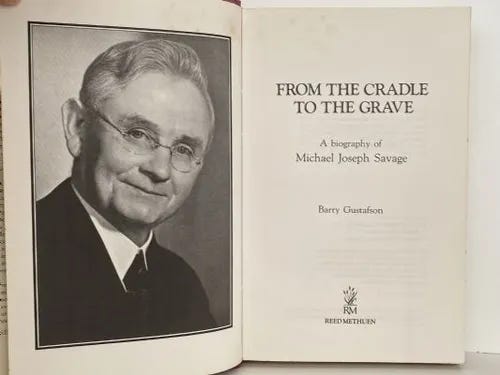
Then came the much larger transformation under the First Labour Government after 1935.
Under Michael Joseph Savage and Walter Nash, the state shifted from merely assisting housing finance to actively restructuring the entire housing and credit system.
Their major changes included:
Mass state housing programme
Beginning in 1937–38, the government built large numbers of high-quality state houses.
These were not temporary welfare housing; they were intended as permanent, dignified working-family homes.
Rents were tied to income affordability.
Expansion of cheap state credit
The government dramatically increased state lending capacity.
Housing finance became an explicit macroeconomic and social policy tool.
Reserve Bank nationalisation and state-directed credit
The Reserve Bank, originally privately owned despite being established by statute in 1934, was effectively brought under full public control in 1936.
This allowed stronger state influence over credit creation and interest policy.
Mortgage interest reduction
Labour pursued policies to reduce mortgage burdens and stabilise borrowing costs during the lingering effects of the Depression.
Housing Construction Department
Centralised planning and large-scale state-led construction capacity were developed.
Standardised but high-quality homes reduced costs.
Shift from speculative finance toward social development
Housing was treated less as a speculative commodity and more as national infrastructure and family security.
Expansion of home ownership
Although Labour is remembered for state rentals, it also supported eventual ownership pathways and broader housing accessibility.
Walter Nash in particular viewed finance as something that should serve national development rather than primarily private banking profit. The Labour Government’s housing system was deeply tied to:
public credit,
employment policy,
wage stability,
and social welfare planning.
The result was one of the largest increases in housing security and home accessibility in New Zealand history. Combined with postwar policies, it contributed to the very high mid-20th-century home ownership rates New Zealand later became known for.
So were the prime ministers who made the biggest differences Seddon and Savage"?
Yes — in the specific history of state-supported housing finance and mass home ownership in New Zealand, the two most transformative prime ministers were probably:
Richard Seddon
Michael Joseph Savage
But they transformed the system in different ways.
Seddon’s Liberal Government (1890s–1906) created the foundational principle:
the state should directly intervene to provide cheap credit to ordinary people instead of leaving finance entirely to private banks and large lenders.
That was revolutionary for its time.
His governments:
introduced state-backed lending,
attacked land and financial concentration,
expanded access to ownership,
and built the institutional framework later governments expanded.
Without the Liberal reforms:
the State Advances system likely would not have existed,
and New Zealand’s later housing model would have looked very different.
Then Michael Joseph Savage transformed the scale and purpose of the system after the Depression.
Savage’s Labour Government:
massively expanded state housing,
used public credit aggressively,
treated housing as social infrastructure,
integrated housing into welfare and economic planning,
and normalised the expectation that ordinary working families should be able to obtain secure, decent housing.
If Seddon established the principle of public housing finance, Savage institutionalised it into a nationwide social system.
You could roughly characterise them this way:
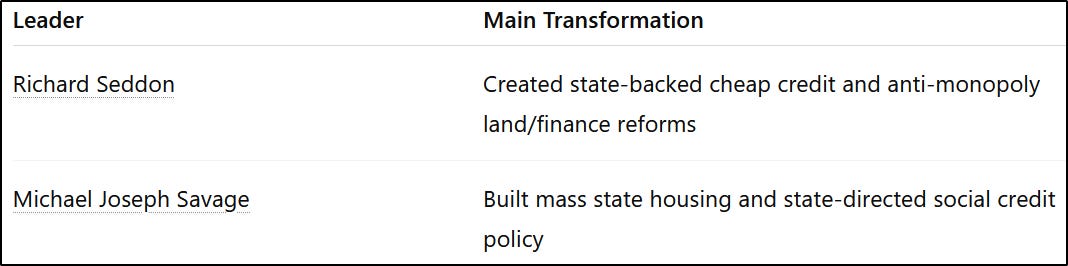
Finance Minister Walter Nash was also crucial under Savage — arguably the chief architect of Labour’s financial and housing machinery.
Other prime ministers mattered too:
Joseph Ward expanded the State Advances system,
postwar governments entrenched high home ownership,
later governments dismantled or commercialised parts of it.
But if you ask:
“Who most fundamentally changed the relationship between ordinary New Zealanders, housing, and state finance?”
the strongest historical answers are Seddon and Savage.
Where is New Zealand now?
Here is Bernard Hickey’s tragic summing up of the cumulative results of successive out of control governments ignoring the wishes of the people whose country they are employed to manage (3 minutes).
Perhaps people will finally realise it is not the “Boomers taking up all the land and wealth”, it is that the boomers voted for governments which built wealth.
And since the mid 1970s governments stopped listening to us, and listened to Banks, the IMF, sponsors, everyone else.
Those governments stopped people building wealth that is there for the building, giving it instead to the rentier class - interest to banks, rent to landlords, extreme profits to goods and service providers.
Some call them private taxes. Of the poorest, our governments levy the ridiculous rate of 25% on their entire income (apart from rent and loan interest, which are exempt from GST, a nice favour to banks and landlords). 100% of the rest of their income is subject to private taxes. Which are spent on? - Pushing up the price of land, housing, business, utilities and infrastructure, and extracting ever-increasing rents, interest and profits.
What can we do now?
Well. Bernard Hickey (above) has proposed the first-glance short-term solution. Borrow to build up the next generation so they can afford to support themselves and easily contribute to social welfare and the common good.
Richard Murphy proposes taxing instead of borrowing.
Professor Steve Keen proposes exactly what Richard Seddon did. Nationalise the banks and make our own money. (The opposite of what US President Franklin Roosevelt sort of did in the 1930s nationalised gold - stole from the middle and lower economic classes, to save the private banks.)
Gary Stevenson proposes excess wealth tax to not only fund the growth that we had, but take back and redistribute the wealth that has been extracted, by force, from the people and society.
My view: None of the above will ever be done until our governments are under our control.
For the first 60 years of our modern history, we had a culture of radical egalitarianism, social justice and kindness. People were also politically aware and literate - everyone listened to the national broadcaster’s news every day. That meant we were able to trust (some of) our governments to work for the good of the people and the country.
That is gone, never to return so long as the extreme wealth inequality exists, where the few can buy votes for governments they sponsor and dictate to.
We now have ~56% immigrant population. Many neither share nor appreciate our culture but seek to exploit it even further.
In those circumstances, there is only one thing that will make governments obey the citizens who employ them.
Here it is, in 2 minutes:
And here is the full discussion and model:
Fiduciary Government — Make Government Accountable Like the Private Sector, and They Will Work. | Knowledge is Power

We are told our governments are “representative democracy”. Accountable. Have Fiduciary Duty. Are not above the law. All FALSE. But if we make it true, they will perform near perfectly. #FiduciaryGovernment
Coming up: I will write about the Athenian true representative democracy, which proved that having personal liability and constant scrutiny makes very good governments.